
Emmylou Harris - Santa Cruz Ca.,june 15,1978 (Remastered, Live On Broadcasting) '2025
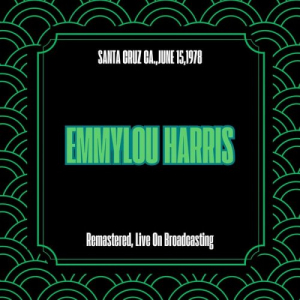
| Artist | Emmylou Harris Related artists |
| Album name | Santa Cruz Ca.,june 15,1978 (Remastered, Live On Broadcasting) |
| Country | |
| Date | 2025 |
| Genre | Country |
| Play time | 45:02 |
| Format / Bitrate | Stereo 1420 Kbps
/ 44.1 kHz MP3 320 Kbps |
| Media | CD |
| Size | 279 MB |
| Price | Download $2.95 |
Order this album and it will be available for purchase and further download within 12 hours
Pre-order album Tracks list
	Tracklist:

1. Could You Love Me>the Green Rolling Hills (Live) (08:48)
2. I Believe Jesus Loves Me (Live) (04:06)
3. If I Needed You (Live) (04:52)
4. Satan's Jeweled Crown (Live) (04:50)
5. Keep on the Sunnyside (Live) (03:52)
6. Under the Weepin' Willow (Live) (03:51)
7. Sleepless Nights (Live) (03:52)
8. Where the Soul of Man Never Dies (Live) (02:52)
9. Here,there,and Everywhere (Live) (03:49)
10. Leavin' Louisiana (Live) (04:06)


 moreHarris was born on April 2, 1947, to a military family stationed in
Birmingham, Alabama. After spending much of her childhood in North Carolina, she
moved to Woodbridge, Virginia while in her teens and graduated high school there
as class valedictorian. After winning a drama scholarship to the University of
North Carolina at Greensboro, she began to seriously study music, learning to
play songs by Bob Dylan and Joan Baez. Soon, Harris was performing in a duo with
fellow UNC student Mike Williams, eventually quitting school to move to New
York, only to find the city's folk music community dying out in the wake of the
psychedelic era.

Still, Harris remained in New York, traveling the Greenwich Village club circuit
before becoming a regular at Gerdes Folk City, where she struck up friendships
with fellow folkies Jerry Jeff Walker, David Bromberg, and Paul Siebel. After
marrying songwriter Tom Slocum in 1969, she recorded her debut LP, 1970's
Gliding Bird. Shortly after the record's release, however, Harris' label
declared bankruptcy, and while pregnant with her first child, her marriage began
to fall apart. After moving to Nashville, she and Slocum divorced, leaving
Harris to raise daughter Hallie on her own. After several months of struggle and
poverty, she moved back in with her parents, who had since bought a farm outside
of Washington, D.C.

There she returned to performing, starting a trio with local musicians Gerry
Mule and Tom Guidera. One evening in 1971, while playing at an area club called
Clyde's, the trio performed to a crowd that included members of the country-rock
pioneers the Flying Burrito Brothers. In the wake of the departure of Gram
Parsons, the band's founder, the Burritos were led by ex-Byrd Chris Hillman, who
was so impressed by Harris' talents that he considered inviting her to join the
group. Instead, Hillman himself quit to join Stephen Stills' Manassas, but he
recommended her to Parsons, who wanted a female vocalist to flesh out the sound
of his solo work, a trailblazing fusion of country and rock & roll he dubbed
"cosmic American music." Their connection was instant, and soon Harris was
learning about country music and singing harmony on Parsons' solo debut, 1972's
G.P. A tour with Parsons' backup unit, the Fallen Angels, followed, and in 1973
they returned to the studio to cut his landmark LP Grievous Angel.

On September 19, just weeks after the album sessions ended, Parsons' fondness
for drugs and alcohol finally caught up to him, and he was found dead in a hotel
room outside of the Joshua Tree National Monument in California. At the time,
Harris was back in Washington, collecting her daughter for a planned move to the
West Coast. Instead, she remained in D.C., reuniting with Tom Guidera to form
the Angel Band. The group signed to Reprise and relocated to Los Angeles to
begin work on Harris' major-label solo debut, 1975's acclaimed Pieces of the
Sky, an impeccable collection made up largely of diverse covers ranging in
origin from Merle Haggard to the Beatles. Produced by Brian Ahern, who would go
on to helm Harris' next ten records -- as well as becoming her second husband --
Pieces of the Sky's second single, a rendition of the Louvin Brothers' "If I
Could Only Win Your Love," became her first Top Five hit. "Light of the Stable,"
a Christmas single complete with backing vocals from Dolly Parton, Linda
Ronstadt, and Neil Young, soon followed; Harris then repaid the favor by singing
on Ronstadt's "The Sweetest Gift" and Young's "Star of Bethlehem."

For her second LP, 1976's Elite Hotel, Harris established a new backing unit,
the Hot Band, which featured legendary Elvis Presley sidemen James Burton and
Glen D. Hardin as well as a young songwriter named Rodney Crowell on backup
vocals and rhythm guitar. The resulting album proved to be a smash, with covers
of Buck Owens' "Together Again" and the Patsy Cline perennial "Sweet Dreams"
both topping the charts. Before beginning sessions for her third effort, 1977's
Luxury Liner, Harris guested on Bob Dylan's Desire and appeared in Martin
Scorsese's documentary of the Band's legendary final performance, The Last
Waltz. Quarter Moon in a Ten Cent Town followed in 1978, led by the single "Two
More Bottles of Wine," her third number one. The record was Crowell's last with
the Hot Band; one of the tracks, "Green Rolling Hills," included backing from
Ricky Skaggs, soon to become Crowell's replacement as Harris' vocal partner.

Released in 1979, Blue Kentucky Girl was her most country-oriented work to date,
an indication of what was to come a year later with Roses in the Snow, a
full-fledged excursion into acoustic bluegrass. In the summer of 1980, a duet
with Roy Orbison, "That Lovin' You Feelin' Again," hit the Top Ten; a yuletide
LP, Light of the Stable, followed at the end of the year. Shortly afterward,
Harris quit touring to focus on raising her second daughter, Meghann.
Evangeline, a patchwork of songs left off of previous albums, appeared in 1981.
Shortly afterward, Skaggs left the Hot Band to embark on a solo career; his
replacement was Barry Tashian, a singer/songwriter best known for fronting the
'60s rock band the Remains.

In 1982, drummer John Ware, the final holdover from the first Hot Band lineup,
left the group; at the same time, Harris' marriage to Ahern was also beginning
to disintegrate. After 1981's Cimarron, Harris and the Hot Band cut a live
album, Last Date, named in honor of the album's chart-topping single "(Lost His
Love) On Our Last Date," a vocal version of the Floyd Cramer instrumental.
Quickly, they returned to the studio to record White Shoes, Harris' final LP
with Ahern at the helm. Her most far-ranging affair yet, it included covers of
Donna Summer's "On the Radio," Johnny Ace's "Pledging My Love," and Sandy
Denny's "Old-Fashioned Waltz."

After leaving Ahern, she and her children moved back to Nashville. There, Harris
joined forces with singer/songwriter Paul Kennerley, on whose 1980 concept
album, The Legend of Jesse James, she had sung backup. Together, they began
formulating a record called The Ballad of Sally Rose, employing the pseudonym
Harris often used on the road to veil what was otherwise a clearly
autobiographical portrait of her own life. Though a commercial failure, the 1985
record proved pivotal in Harris' continued evolution as an artist and a
risk-taker, and she would release an expanded edition of the album in 2018. It
also marked another chapter in her personal life when she and Kennerley wed
shortly after concluding their tour. Angel Band, a subtle acoustic collection of
traditional country spirituals, followed, although the record was not issued
until 1987, after the release of its immediate follow-up, Thirteen.

Harris, Dolly Parton, and Linda Ronstadt had first toyed with the idea of
recording an album together as far back as 1977, only to watch the project
falter in light of touring commitments and other red tape. Finally, in 1987,
they issued Trio, a collection that proved to be Harris' best-selling album to
date, generating the hits "To Know Him Is to Love Him" (a cover of the Phil
Spector classic), "Telling Me Lies," and "Those Memories of You." The record's
success spurred the 1990 release of Duets, a compilation of her earlier hits in
conjunction with George Jones, Willie Nelson, Gram Parsons, and others. (In
1999, Harris would reunite with Parton and Ronstadt for a second collaborative
album, Trio II, and the two albums and a number of unreleased tracks were later
compiled into a box set, 2016's The Complete Trio Collection.) Fronting a new
band, the Nash Ramblers, in 1992, Harris issued At the Ryman, a live set
recorded at Nashville's legendary Ryman Auditorium, the former home of the Grand
Ole Opry. At the time of the record's release, Harris was also serving a term as
president of the Country Music Foundation.

In 1993, she ended her long association with Warner Bros./Reprise to move to
Asylum Records, where she released Cowgirl's Prayer shortly after her separation
from Paul Kennerley. Two years later, during a stage in her career when most
performers retreat to the safety of rehashing their greatest hits again and
again, Harris issued Wrecking Ball, perhaps her most adventuresome record to
date. Produced by Daniel Lanois, the New Orleans-based artist best known for his
atmospheric work with U2, Peter Gabriel, and Bob Dylan, Wrecking Ball was a
hypnotic, staggeringly beautiful work comprised of songs ranging from the Neil
Young-penned title track (which featured its writer on backing vocals) to Jimi
Hendrix's "May This Be Love" and the talented newcomer Gillian Welch's "Orphan
Girl."

A three-disc retrospective of her years with Warner Bros., Portraits, appeared
in 1996, and in 1998 Harris resurfaced with Spyboy. Following the release of
Trio II later that year, she and Ronstadt again reunited, this time minus
Parton, for 1999's Western Wall: The Tucson Sessions. In 2000, Harris returned
with Red Dirt Girl, her first album of original material in five years,
featuring appearances from Bruce Springsteen, Patti Scialfa, Jill Cuniff, and
Patty Griffin. She also made an appearance on the soundtrack for O Brother,
Where Art Thou?, along with a number of traditional blues, country, and folk
artists. In 2003, Harris released Stumble Into Grace; two years later, she
collaborated with Conor Oberst on I'm Wide Awake, It's Morning, as well as
recording a version of "The Scarlet Tide" with Elvis Costello for the soundtrack
to Cold Mountain. The retrospective The Very Best of Emmylou Harris: Heartaches
& Highways was also released in 2005 on Rhino.

All the Roadrunning, a collection of songs written with Mark Knopfler over the
course of seven years, was released in 2006. In 2007 Harris sang a duet with
Anne Murray, which appeared on Murray's 2008 album Duets: Friends and Legends.
The Brian Ahern-produced All I Intended to Be arrived in 2008 as well. Hard
Bargain, Harris' 21st studio album, was released by Nonesuch early in 2011.
Produced by Jay Joyce, the album featured the striking Harris originals "Darlin'
Kate" (written for Kate McGarrigle) and "The Road" (written for Gram Parsons).
She contributed vocals to three songs on the Nick Cave/Warren Ellis-composed
score to the film Lawless, including "Cosmonaut" and "Fire in the Blood," as
well as a reading of Townes Van Zandt's "Snake Song." Harris also recorded Old
Yellow Moon, a duet album with songwriter Rodney Crowell, a reunited version of
her Hot Band, and producer Brian Ahern, performing the work of songwriters they
admired. The album was issued in February of 2013. The pair followed it with The
Traveling Kind, produced by Joe Henry. A mirror image of its predecessor, it
showcased the pair's writing in collaboration with Mary Carr, Cory Chisel, Will
Jennings, and Larry Klein, among others, as well as covers of songs by Lucinda
Williams and Amy Allison. Nonesuch released the album in May 2015. © Jason
Ankeny


Emmylou Harris - Santa Cruz Ca.,june 15,1978.rar -  279.4 MB
Related artists
Emmylou Harris
Album
- 2026 Rolling Through (Live Amsterdam 75)
- 2025 Farther Down The Road (Live Pasadena 84)
- 2025 At the Catalyst Santa Cruz Ca, June 30, 1982 (Remastered, Live On Broadcasting)
- 2025 Santa Cruz Ca.,june 15,1978 (Remastered, Live On Broadcasting)
- 2025 Taft Theatre, Cincinnati, Ohio, May 11th, 1985 (Remastered, Live On Broadcasting)
- 2025 The Boarding House, San Francisco, November 28th, 1975 (Remastered, Live On Broadcasting)
- 2024 Live in San Francisco 1975
- 2023 First Album Demos
- 2021 Pbs Soundstage
- 2021 My Fathers Place
- 2019 Girls Night Out
- 2019 Bottom Line, New York 1998
- 2018 The Ballad Of Sally Rose (Expanded Edition)
- 2014 Wrecking Ball (2CD)
- 2011 Hard Bargain
- 2008 All I Intended To Be
- 2007 Songbird: Rare Tracks And Forgotten Gems (4CD)
- 2005 Wrecking Ball
- 2005 The Very Best Of Emmylou Harris
- 2004 Quarter Moon In A Ten Cent Town
- 2003 Stumble Into Grace
- 2002 Producer's Cut [2012, RE, RM, US]
- 2000 Red Dirt Girl
- 1998 Spyboy
- 1996 Portraits [3CD]
- 1995 Wrecking Ball [2014, 7559-79822-4, RE, DLX, EU]
- 1994 Songs Of The West
- 1993 Cowgirl's Prayer
- 1990 Duets
- 1990 Brand New Dance
- 1989 Bluebird (2014 Remastered)
- 1988 Bluebird
- 1987 Angel Band [3]
- 1986 Thirteen [2]
- 1985 The Ballad Of Sally Rose [3]
- 1983 White Shoes [2]
- 1982 Last Date [2000, US, Eminent EM-25040-2]
- 1982 Emmylou Harris
- 1981 Cimarron [4]
- 1981 Evangeline [2]
- 1980 Roses In The Snow [5]
- 1979 Blue Kentucky Girl [6]
- 1979 Light Of The Stable [2004, EU, Warner 8122-76110-2]
- 1979 Light Of The Stable: The Christmas Album [1992, US, Warner 9 3484-2]
- 1978 Quarter Moon In A Ten Cent Town [6]
- 1978 Quarter Moon In A Ten Cent Town
- 1978 Quarter Moon In A Ten Cent Town [2004 Remastered]
- 1978 Quarter Moon In A Ten Cent Town (Vinyl Rip) [MFSL Remaster]
- 1978 Quarter Moon In A Ten Cent Town (2014 Remastered)
- 1978 Quarter Moon In A Ten Cent Town [2010, Rhino Vinyl Replica Original Album Series]
- 1978 Quarter Moon In A Ten Cent Town
- 1978 Profile: Best Of Emmylou Harris
- 1977 Luxury Liner [2]
- 1976 Luxury Liner [2]
- 1975 Elite Hotel [4]
- 1975 Pieces Of The Sky [4]
- 1975 Cowboy Angels 1975
Anthology
- 2001 Anthology (CD2)
- 2001 Anthology (CD1)
- 2001 Anthology: The Warner/Reprise Years [2003 Remastered]
Compilation
- 2021 Acoustic Country
- 2020 Callin Me Home (The Best Of Broadcasts 1970-1994) [Remastered]
- 2020 Callin' Me Home (The Best Of Broadcasts 1970-1994 Remastered)
- 2013 Original Album Series Vol. 2 [81227 96487, EU]
- 2010 Original Album Series [8122 79835 1, EU]
- 2007 Songbird: Rare Tracks & Forgotten Gems [R2 74744, US]
- 1996 Portraits CD1
- 1996 Portraits CD2
- 1996 Portraits CD3
- 1984 Profile II: The Best Of Emmylou Harris
- 1978 Profile: Best Of Emmylou Harris
Live album
- 2024 Queen Of The West
- 2023 Out West (Live California '90)
- 2020 Always On The Sunny Side (Live, Santa Cruz 79)
- 2019 Together Again [Live]
- 1984 Dress Rehearsal [2022 Remastered, Live]
- 1983 Beyond The Palace [2021 Remastered, Live]
- 1978 Hickory Wind [2016 Remastered, Live]
- 1976 Long Island Lullabies [2019 Remastered, Live]
- 1975 Live At The Amazing Coffee House, Evanston, Il 15th May 1975 [2015 Remastered]