
Chuck Berry - Midnight Flier (Live) '2025
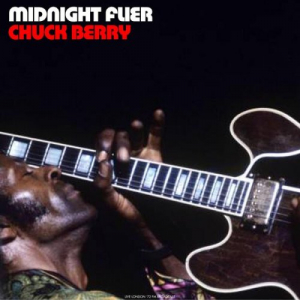
| Artist | Chuck Berry Related artists |
| Album name | Midnight Flier (Live) |
| Country | |
| Date | 2025 |
| Genre | Rock and Roll,Rhythm and Blues |
| Play time | 1:07:55 |
| Format / Bitrate | Stereo 1420 Kbps
/ 44.1 kHz MP3 320 Kbps |
| Media | CD |
| Size | 333 MB |
| Price | Download $2.95 |
Order this album and it will be available for purchase and further download within 12 hours
Pre-order album Tracks list
	Tracklist:

1. Roll Over Beethoven (Live 1972) (03:43)
2. School Day (Ring Ring Goes The Bell) (Live 1972) (03:15)
3. Sweet Little Sixteen (Live 1972) (02:30)
4. Too Much Monkey Business (Live 1972) (02:33)
5. South Of The Border (Live 1972) (01:48)
6. Beer Drinking Woman (Live 1972) (04:32)
7. Let It Rock (Live 1972) (04:38)
8. Mean Old World (Live 1972) (07:12)
9. Carol (Live 1972) (03:34)
10. Rock And Roll Music (Live 1972) (01:44)
11. Liverpool Drive (Instrumental) (Live 1972) (03:09)
12. Promised Land (Live 1972) (02:05)
13. Reelin' And Rockin' (Live 1972) (07:17)
14. Nadine (Is It You?) (Live 1972) (01:38)
15. My Ding-a-Ling (Live 1972) (11:00)
16. Bye Bye Johnny (Live 1972) (02:48)
17. Johnny B. Goode (Live 1972) (04:22)


 moreHe was born Charles Edward Anderson Berry to a large family in St. Louis
in 1926. A bright pupil, he developed a love for poetry and hard blues early on,
winning a high school talent contest with a guitar-and-vocal rendition of Jay
McShann's big-band number "Confessin' the Blues." With some local tutelage from
the neighborhood barber, Berry progressed from a four-string tenor guitar to an
official six-string model and was soon working the local East St. Louis club
scene, sitting in everywhere he could. He quickly found out that Black audiences
liked a wide variety of music and set himself the task of being able to
reproduce as much of it as possible. What he found they really liked -- besides
the blues and Nat King Cole tunes -- was the sight and sound of a Black man
playing white hillbilly music, and Berry's showman-like flair, coupled with his
seemingly inexhaustible supply of fresh verses to old favorites, quickly made
him a name on the circuit. In 1954, he ended up taking over pianist Johnny
Johnson's small combo, and a residency at the Cosmopolitan Club soon made the
Chuck Berry Trio the top attraction in the Black community, with Ike Turner's
Kings of Rhythm their only real competition.

But Berry had bigger ideas; he yearned to make records, and a trip to Chicago
netted a two-minute conversation with his idol Muddy Waters, who encouraged him
to approach Chess Records. Upon listening to Berry's homemade demo tape, label
president Leonard Chess professed a liking for a hillbilly tune on it named "Ida
Red" and quickly scheduled a recording for May 21, 1955. During the session the
title was changed to "Maybellene" and rock & roll history was made. Although the
record only made it to the mid-20s on the Billboard pop chart, its overall
influence was massive and groundbreaking in its scope. Finally, here was a Black
rock & roll record with across-the-board appeal, embraced by white teenagers and
Southern hillbilly musicians (a young Elvis Presley, still a full year from
national stardom, quickly added it to his stage show), that for once couldn't be
successfully covered by a pop singer like Snooky Lanson on Your Hit Parade. Part
of the secret to its originality was Berry's blazing 24-bar guitar solo in the
middle of it, the imaginative rhyme schemes in the lyrics, and the sheer thump
of the record, all signaling that rock & roll had arrived and was no fad.
Helping to put the record over to a white teenage audience was the highly
influential New York disc jockey Alan Freed, who had been given part of the
writers' credits by Chess in return for his spins and plugs. But to his credit,
Freed was also the first white DJ/promoter to consistently use Berry on his rock
& roll stage show extravaganzas at the Brooklyn Fox and Paramount Theaters
(playing to predominately white audiences); and when Hollywood came calling a
year or so later, he also made sure that Berry appeared with him in Rock! Rock!
Rock!, Go, Johnny, Go!, and Mister Rock'n'Roll. Within a year's time, Berry had
gone from a local St. Louis blues picker making $15.00 a night to an overnight
sensation commanding over a hundred times that, arriving at the dawn of a new
strain of popular music called rock & roll.

The hits started coming thick and fast over the next few years, every one of
them about to become a classic of the genre: "Roll Over Beethoven," "Thirty
Days," "Too Much Monkey Business," "Brown Eyed Handsome Man," "You Can't Catch
Me," "School Day," "Carol," "Back in the U.S.A.," "Little Queenie," "Memphis,
Tennessee," "Johnny B. Goode," and the tune that defined the moment perfectly,
"Rock and Roll Music." Berry was not only in constant demand, touring the
country on mixed package shows and appearing on television and in movies, but
smart enough to know exactly what to do with the spoils of a suddenly successful
show business career. He started investing heavily in St. Louis-area real estate
and, ever one to push the envelope, opened up a racially mixed nightspot called
The Club Bandstand in 1958 to the consternation of uptight locals. These were
not the plans of your average R&B singers who contented themselves with a
wardrobe of flashy suits, a new Cadillac, and the nicest house in the Black
section of town. Berry was smart, with plenty of business savvy, and was already
making plans to open an amusement park in nearby Wentzville. When the St. Louis
hierarchy found out that an underage hat-check girl Berry hired had also set up
shop as a prostitute at a nearby hotel, trouble came down on Berry like a
sledgehammer on a fly. Charged with transporting a minor over state lines (the
Mann Act), Berry endured two trials and was sentenced to federal prison for two
years as a result.

He emerged from prison a moody, embittered man. But two very important things
had happened in his absence. First, British teenagers had discovered his music
and were making his old songs hits all over again. Second, and perhaps most
important, America had discovered the Beatles and the Rolling Stones, both of
whom based their music on Berry's style, with the Stones' early albums sounding
like a Berry song list. Rather than being resigned to the has-been circuit,
Berry found himself in the midst of a worldwide beat boom with his music as the
centerpiece. He came back with a clutch of hits ("Nadine," "No Particular Place
to Go," "You Never Can Tell"), toured Britain in triumph, and appeared on the
big screen with his British disciples in the groundbreaking T.A.M.I. Show in
1964.

Berry had moved with the times and found a new audience in the bargain, and when
the cries of "yeah-yeah-yeah" were replaced with peace signs, Berry altered his
live act to include a passel of slow blues and quickly became a fixture on the
festival and hippie ballroom circuit. After a disastrous stint with Mercury
Records, he returned to Chess in the early '70s and scored his last hit with a
live version of the salacious nursery rhyme "My Ding-A-Ling," yielding Berry his
first official gold record. By decade's end, he was as in-demand as ever,
working every oldies revival show, TV special, and festival that was thrown his
way. But once again, trouble with the law reared its ugly head and 1979 saw
Berry headed back to prison, this time for income tax evasion. Upon his release
this time, the creative days of Chuck Berry seemed to have come to an end. He
appeared as himself in the Alan Freed biopic American Hot Wax, and was inducted
into the Rock & Roll Hall of Fame, but steadfastly refused to record any new
material or even issue a live album. His live performances became increasingly
erratic, with Berry working with terrible backup bands and turning in sloppy,
out-of-tune performances that did much to tarnish his reputation with young and
old fans alike. In 1987, he published his first book, Chuck Berry: The
Autobiography, and the same year saw the film release of what will likely be his
lasting legacy, the rockumentary Hail! Hail! Rock 'n' Roll, which included live
footage from a 60th birthday concert with Keith Richards as musical director and
the usual bevy of superstars coming out for guest turns.

For the next three decades, Berry devoted himself to the oldies circuit,
regularly appearing at the Blueberry Hill bar in his hometown of St. Louis and
sometimes embarking on tours of the U.S. or Europe. In several interviews he
promised the existence of a new record, but nothing was made official until he
announced the 2017 release of Chuck on his 90th birthday. Berry didn't live to
see its release: he died at his home on March 18, 2017. Chuck saw the light of
day in June 2017; it peaked at 49 in the U.S. and number nine in the U.K. Live
from Blueberry Hill, a collection of performances Berry gave over the years at
his regular gig at the St. Louis bar, appeared in December 2021.

For all of his off-stage exploits and seemingly ongoing troubles with the law,
Chuck Berry remains the epitome of rock & roll, and his music will endure long
after his private escapades have faded from memory. When it comes down to his
music, perhaps John Lennon said it best, "If you were going to give rock & roll
another name, you might call it 'Chuck Berry'." © Cub Koda


Chuck Berry - Midnight Flier (Live).rar -  333.5 MB
Related artists
Chuck Berry
Album
- 2026 After School Session - Bonus Track
- 2025 Let It Rock: Greatest Hits 1955-60
- 2025 Chuck Berry Essentials : The Greatest Hits from the Father of RockNRoll
- 2025 Midnight Flier (Live)
- 2024 Jam'n Rock
- 2024 Live... the Palladium, New York 1988
- 2023 Deep Down (Live 1988)
- 2022 No Money Down
- 2021 Vacation Time Chuck Berry Favourites
- 2021 Live at Toronto Rock n Roll Revival, 1969
- 2021 Waterloo Blues (Live From Belgium 65)
- 2020 Rockin' N Rollin' The New Year
- 2019 Live in Cleveland (Live)
- 2018 The Rough Guide To Chuck Berry
- 2017 Chuck [3]
- 2017 BD Music Presents: Chuck Berry
- 2015 After School Session Plus 10 Bonus Tracks
- 2014 Brown Eyed Handsome Man
- 2012 Best Of The Chess Years
- 2012 Confessin My Blues
- 2012 Rockin At The Hops / New Juke Box Hits
- 2010 One Dozen Berry's
- 2009 Rock & Roll Music (Live!)
- 2008 Berry Is On Top + St. Louis To Liverpool [mfsl Udcd 776]
- 2007 Rock 'N' Roll Rarities
- 2006 You Came A Long Way From St. Louis: The Many Sides Of Chuck Berry
- 2005 The Definitive Collection
- 2004 St. Louis To Liverpool
- 2003 Blues
- 1999 One Dozen Berrys / Juke Box Hits
- 1996 Let It Rock
- 1996 Rock And Roll Music
- 1993 Hail! Hail! Rock 'n' Roll
- 1991 The Chess Years (CD1)
- 1991 The Chess Years (CD2)
- 1991 The Chess Years (CD3)
- 1991 The Chess Years (CD4)
- 1991 The Chess Years (CD5)
- 1991 The Chess Years (CD6)
- 1991 The Chess Years (CD7)
- 1991 The Chess Years (CD8)
- 1991 The Chess Years (CD9)
- 1990 Masters of the Blues - The Best of Chuck Berry
- 1986 Rock 'n Roll Rarities
- 1984 The Great-twenty-eight
- 1983 America's Hottest Wax
- 1983 The Best Of Chuck Berry
- 1980 20 Super Hits
- 1979 Rockit [2014, 603497855766, RE, RM, US]
- 1975 Chuck Berry [2014, 602537781430, RE, RM, US]
- 1973 Bio [2014, 602537781782, RE, RM, US]
- 1972 The London Chuck Berry Sessions [3]
- 1971 San Francisco Dues [2014, 602537779192, RE, RM, US]
- 1970 Back Home [2013, 602537781744, RE, RM, US]
- 1969 Concerto In B. Goode [2013, 042283607422, RE, RM, US]
- 1968 From St. Louie To Frisco [2013, 042283607323, RE, RM, US]
- 1967 Golden Hits
- 1967 Chuck Berry in Memphis [2007 Remastered]
- 1967 Chuck Berry's Golden Hits [2]
- 1967 Chuck Berry In Memphis [2007, 042283607125, RE, RM, US]
- 1965 Chuck Berry In London / Fresh Berry's
- 1965 Chuck Berry In London [2014, 602537779208, RE, RM, US]
- 1965 Fresh Berry's [2014, 602537779185, RE, RM, US]
- 1964 St. Louis To Liverpool [2]
- 1964 Two Great Guitars [2014, 602537781492, RE, RM, US]
- 1963 Chuck Berry On Stage [2]
- 1962 Chuck Berry Twist
- 1961 New Juke Box Hits [2014, 602537779147, RE, RM, US]
- 1960 Rockin At The Hops
- 1960 Rockin' At The Hops [2]
- 1959 Chuck Berry Is On Top
- 1959 Berry Is On Top [3]
- 1958 One Dozen Berrys [2018, 602567832652, RE, RM, US]
- 1957 After School Session [3]
Anthology
- 2012 Best Of The Chess Years (cd One)
- 2010 Have Mercy: His Complete Chess Recordings 1969-1974 [5]
- 2010 Have Mercy: His Complete Chess Recordings 1969-1974(Disk 1)
- 2010 Have Mercy: His Complete Chess Recordings 1969-1974(Disk 2)
- 2010 Have Mercy: His Complete Chess Recordings 1969-1974(Disk 3)
- 2010 Have Mercy: His Complete Chess Recordings 1969-1974(Disk 4)
- 2010 Have Mercy: His Complete Chess Recordings 1969-1974 (4CD)
- 2009 You Never Can Tell: His Complete Chess Recordings 1960 - 1966 [4]
- 2009 Complete Chess Recordings 1960-1966 (disc 4)
- 2007 Johnny B. Goode: His Complete '50's Chess Recordings [4]
- 2000 All Stars 2000
- 1984 Greatest Hits
Compilation
- 2025 Rockin' Through the Galaxy
- 2024 Masters of Rock Presents Chuck Berry [Remastered]
- 2024 Vinyl Story Presents Chuck Berry [Remastered]
- 2021 One Dozen Berrys Plus Chuck Berry Is on Top
- 2021 The Complete 1955-61 Chess Singles
- 2020 Chuck Berry & Other Kings Of Rock 'n' Roll
- 2014 Rock And Roll Music - Any Old Way You Choose It (The Complete Studio Recordings ... Plus!) [BCD 17273 PL, RM, DLX, EU]
- 2013 Chuck Berry 1954-1961 (The Indispensable)
- 2012 Best Of The Chess Years [NOT3CD086, UK]
- 2010 Have Mercy His Complete Chess Recordings 1969-1974 [2727346, UK]
- 2009 You Never Can Tel - lHis Complete Chess 1960-1966 [B0012465-02, US]
- 2008 Berry Is On Top + St. Louis To Liverpool [UDCD 776, RM, US]
- 2007 Johnny B. Goode (His Complete '50s Chess Recordings) [B0009473-02, US]
- 2007 Saga All Stars: Roll Over Beethoven / The Singles 1955-56
- 2007 The Ultimate Collection
- 2006 You Came A Long Way From St. Louis: The Many Sides Of Chuck Berry [9842428, US]
- 2005 The Definitive Collection [B0004417-02, RM, US]
- 2005 Gold
- 2004 All The Very Best [GFS302, UK]
- 2003 Blues [B0000530-02, RM, US]
- 2000 The Anthology [112 304-2, EU]
- 1999 One Dozen Berrys / Juke Box Hits [BGOCD458, UK]
- 1999 20th Century Masters: The Best Of Chuck Berry: The Millennium Collection
- 1998 Chuck Berry In London - Fresh Berry's [BGOCD395, UK]
- 1996 Let It Rock [MCAD-20983, US]
- 1993 Hail! Hail! Rock 'n' Roll [CPCD 8006, EU]
- 1993 On The Blues Side [CDCH-397, UK]
- 1991 The Chess Years [CD RED BOX 2, UK]
- 1990 The Best Of Chuck Berry [90.156-2, NL]
- 1983 The Best Of Chuck Berry [600033, FR]
- 1982 The Great Twenty-Eight [2]
- 1975 Chuck Berry Best Of Best [FD-200, JAPAN]
- 1960 One Dozen Berrys-juke Box Hits
Live album
- 2021 Toronto Rock 'N' Roll Revival 1969 [EU]
- 2020 Toronto Rock 'n Roll Revival 1969
- 2017 Oh Yeah! Live In Detroit [602567092889, US]
- 1999 Toronto Rock Concert
- 1967 Live At The Fillmore Auditorium
- 1967 Live At The Fillmore Auditorium - San Francisco [2]
Soundtrack