
Tim Buckley - Greetings from West Hollywood (Remastered) '2017
24bit
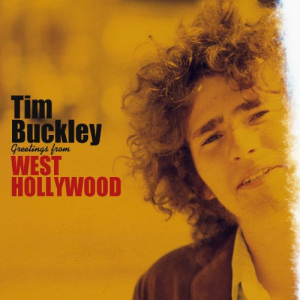
| Artist | Tim Buckley Related artists |
| Album name | Greetings from West Hollywood (Remastered) |
| Country | |
| Date | 2017 |
| Genre | Folk Rock,Singer-Songwriter |
| Play time | : 01:08:34 |
| Format / Bitrate | 24 BIT Stereo 2429 Kbps / 96 kHz |
| Media | WEB |
| Size | : 1.3 gb |
| Price | Download $8.95 |
Order this album and it will be available for purchase and further download within 12 hours
Pre-order album Tracks list
	Tracklist
---------
01. Buzzin' Fly (Remastered)
02. Chase The Blues Away (Remastered)
03. I Had A Talk With My Woman (Remastered)
04. Blue Melody (Remastered)
05. Nobody Walkin' (Remastered)
06. Venice Mating Call (Remastered)
07. I Don't Need It To Rain (Remastered)
08. Driftin' (Remastered)
09. Gypsy Woman (Remastered)

One of the great rock vocalists of the 1960s, Tim Buckley drew from folk,
psychedelic rock, and progressive jazz to create a considerable body of
adventurous work in his brief lifetime. His multi-octave range was capable of
not just astonishing power, but great emotional expressiveness, swooping from
sorrowful tenderness to anguished wailing. His restless quest for new territory
worked against him commercially: By the time his fans had hooked into his latest
album, he was onto something else entirely, both live and in the studio. In this
sense he recalled artists such as Miles Davis and David Bowie, who were so eager
to look forward and change that they confused and even angered listeners who
wanted more stylistic consistency. However, his eclecticism has also ensured a
durable fascination with his work that has engendered a growing posthumous cult
for his music, often with listeners who were too young (or not around) to
appreciate his music while he was active.

Buckley emerged from the same '60s Orange County, California folk scene that
spawned Jackson Browne and the Nitty Gritty Dirt Band. Mothers of Invention
drummer Jimmy Carl Black introduced Buckley and a couple of musicians Buckley
was playing with to the Mothers' manager, Herbie Cohen. Although Cohen may have
first been interested in Buckley as a songwriter, he realized after hearing some
demos that Buckley was also a diamond in the rough as a singer. Cohen became
Buckley's manager, and helped the singer get a deal with Elektra.

Before Buckley had reached his 20th birthday, he'd released his debut album. The
slightly fey but enormously promising effort highlighted his soaring melodies
and romantic, opaque lyrics. Baroque psychedelia was the order of the day for
many Elektra releases of the time, and Buckley's early folk-rock albums were
embellished with important contributions from musicians Lee Underwood (guitar),
Van Dyke Parks (keyboards), Jim Fielder (bass), and Jerry Yester. Larry Beckett
was also an overlooked contributor to Buckley's first two albums, co-writing
many of the songs.

The fragile, melancholic, orchestrated beauty of the material had an innocent
quality that was dampened only slightly on the second LP, Goodbye and Hello
(1967). Buckley's songs and arrangements became more ambitious and psychedelic,
particularly on the lengthy title track. This was also his only album to reach
the Top 200, where it only peaked at number 171; Buckley was always an artist
who found his primary constituency among the underground, even for his most
accessible efforts. His third album, Happy Sad, found him going in a decidedly
jazzier direction in both his vocalizing and his instrumentation, introducing
congas and vibes. Though it seemed a retreat from commercial considerations at
the time, Happy Sad actually concluded the triumvirate of recordings that are
judged to be his most accessible.

The truth was, by the late '60s Buckley was hardly interested in folk-rock at
all. He was more intrigued by jazz; not only soothing modern jazz (as heard on
the posthumous release of acoustic 1968 live material, Dream Letter), but also
its most avant-garde strains. His songs became much more oblique in structure,
and skeletal in lyrics, especially when the partnership with Larry Beckett was
ruptured after the latter's induction into the Army. Some of his songs abandoned
lyrics almost entirely, treating his voice itself as an instrument, wordlessly
contorting, screaming, and moaning, sometimes quite cacophonously. In this
context, Lorca was viewed by most fans and critics not just as a shocking
departure, but a downright bummer. No longer was Buckley a romantic, melodic
poet; he was an experimental artiste who sometimes seemed bent on punishing both
himself and his listeners with his wordless shrieks and jarringly dissonant
music.

Almost as if to prove that he was still capable of gentle, uplifting jazzy
pop-folk, Buckley issued Blue Afternoon around the same time. Bizarrely, Blue
Afternoon and Lorca were issued almost simultaneously, on different labels.
While an admirable demonstration of his versatility, it was commercial
near-suicide, each album canceling the impact of the other, as well as confusing
his remaining fans. Buckley found his best middle ground between accessibility
and jazzy improvisation on 1970's Starsailor, which is probably the best
showcase of his sheer vocal abilities, although many prefer the more cogent
material of his earliest albums.

By this point, though, Buckley's approach was so uncommercial that it was
jeopardizing his commercial survival. And not just on record; he was equally
uncompromising as a live act, as the posthumously issued Live at the Troubadour
1969 demonstrates, with its stretched-to-the-limit jams and searing improv
vocals. (In 2017, two more archival live albums were compiled from Buckley's
1969 run at the Troubadour in Los Angeles, Greetings from West Hollywood and
Venice Mating Call.) For a time, he was said to have earned his living as a taxi
driver and chauffeur; he also flirted with films for a while. When he returned
to the studio, it was as a much more commercial singer/songwriter (some have
suggested that various management and label pressures were behind this shift).

As much of a schism as Buckley's experimental jazz period created among fans and
critics, his final recordings have proved even more divisive, even among big
Buckley fans. Some view these efforts, which mix funk, sex-driven lyrical
concerns, and laid-back L.A. session musicians, as proof of his mastery of the
blue-eyed soul idiom. Others find them a sad waste of talent, or relics of a
prodigy who was burning out rather than conquering new realms. Neophytes should
be aware of the difference of critical opinion regarding this era, but on the
whole his final three albums are his least impressive. Those who feel otherwise
usually cite the earliest of those LPs, Greetings from L.A. (1972), as his best
work from his final phase.

Buckley's life came to a sudden end in the middle of 1975, when he died of a
heroin overdose just after completing a tour. Those close to him insist that he
had been clean for some time and lament the loss of an artist who, despite some
recent failures, still had much to offer. Buckley's stock began to rise among
the rock underground after the Cocteau Twins covered his "Song for the Siren" in
the 1980s. The posthumous releases of two late-'60s live sets (Dream Letter and
Live at the Troubadour 1969) in the early '90s also boosted his profile, as well
as unveiling some interesting previously unreleased compositions. His son Jeff
Buckley went on to mount a musical career as well before his own tragic death in
1997.


- ALL MY ALBUMS -
Related artists
Tim Buckley
Album
- 2022 The Copenhagen Tapes
- 2019 Live at the Electric Theatre Co Chicago, 1968
- 2017 Look at the Fool [Remastered]
- 2017 Venice Mating Call [2]
- 2017 Folk: 5 Classic Albums
- 2017 Greetings from West Hollywood (Remastered)
- 2009 Live At The Folklore Center, NYC ~ March 6, 1967
- 2009 Live at the Folklore Center - March 6th, 1967
- 2001 Morning Glory (Anthology) (cd 1) + scans
- 2001 Morning Glory (Anthology) (cd 2)
- 2001 The Dream Belongs To Me
- 1999 Works In Progress
- 1999 Once I Was: BBC Sessions
- 1995 Return Of The Starsailor
- 1991 Strange fruit
- 1990/1995 Dream Letter: Live in London 1968
- 1990 Blue Obsession
- 1974 Look At The Fool
- 1973 Sefronia
- 1973 Honeyman (live 1973)
- 1972 Greetings From L.a.
- 1970 Lorca
- 1970 Blue Afternoon
- 1970 Starsailor
- 1969 Happy Sad
- 1968 Dream Letter (live In London 1968) (2CD)
- 1967 Goodbye And Hello
- 1966 Tim Buckley & Hello And Goodbye
- 1966 Tim Buckley [2]
Bootleg
- 1975 Blue Obsession - The Starwood, Los Angeles, CA, 5-9-1975
- 1975 Starwood, Los Angeles, CA 1-01-75
- 1974 Central Park, New York, NY 7-27-74 (AUD)
- 1972 Felt Forum 9-23-72
- 1969 Santa Monica Civic Auditorium-12-13-69
- 1969 Denver Pop Festival-6-28-69 (AUD)
- 1967 Folklore Center, New York, NY 3-6-67
Compilation
Live album
- 2021 Bear's Sonic Journals: Merry-Go-Round At The Carousel
- 2017 Venice Mating Call [RM, EU]
- 1973 Honeyman
- 1969 Live At The Troubadour
- 1968 Dream Letter (live In London 1968)
Single