
Black Sabbath - The End (Live) '2017
24bit
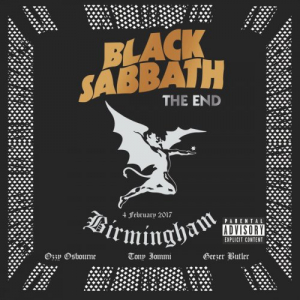
| Artist | Black Sabbath Related artists |
| Album name | The End (Live) |
| Country | |
| Date | 2017 |
| Genre | Hard Rock,Classic Rock,Heavy Metal |
| Play time | : 01:47:56 |
| Format / Bitrate | 24 BIT Stereo 2429 Kbps / 96 kHz |
| Media | WEB |
| Size | : 2499 mb |
| Price | Download $8.95 |
Order this album and it will be available for purchase and further download within 12 hours
Pre-order album Tracks list
	Tracklist
---------
01. Black Sabbath
02. Fairies Wear Boots
03. Under The Sun / Every Day Comes And Goes
04. After Forever
05. Into The Void
06. Snowblind
07. Band Introductions
08. War Pigs
09. Behind The Wall Of Sleep
10. Bassically / N.I.B.
11. Hand Of Doom
12. Supernaut / Sabbath Bloody Sabbath / Megalomania
13. Rat Salad / Drum Solo
14. Iron Man
15. Dirty Women
16. Children Of The Grave
17. Paranoid


An English hard rock institution whose influence on heavy metal cannot be
overstated, Black Sabbath not only pioneered the genre, they helped launch the
career of one of its most colorful and controversial characters in Ozzy
Osbourne. The band distilled the smoke and strife of its industrial hometown
into a punitive blast of doom-laden heavy blues-rock via bass player Geezer
Butler's dystopian lyrics, which leaned heavily on the occult, and guitarist
Tony Iommi's seismic riffing. When paired with Bill Ward's economical yet
formidable work behind the kit and Osbourne's primal tenor, the effect was both
powerful and accessible - a blueprint for aspiring decibel pushers of every
skill level.

The band formed in 1968 under the ill-fitting name the Polka Tulk Blues Band -
Iommi and Ward, who had just left the pub blues outfit Mythology, were looking
to take the genre in a more robust direction. They enlisted the services of
Butler and Osbourne, both of whom had played together in a group called Rare
Breed, and by the end of the year were operating under the moniker Earth.

The transition from Earth to Black Sabbath took place the following year, after
Osbourne and Butler penned a song that was inspired by the 1963 Boris Karloff
horror film of the same name. The resulting "Black Sabbath," a funereal slab of
blast furnace-forged dread built around the augmented fourth/tritonic interval,
better known as the devil's interval, would serve as the opening volley on their
explosive eponymous 1970 debut. Released via Vertigo Records, the more
progressive subsidiary of Philips/Phonogram, the bulk of the Rodger
Bain-produced LP was recorded in a single day. Only a handful of guitar overdubs
- Iommi's signature sound was lent considerable gravitas by the fact that he
tuned his guitar a half-step down to provide some slack for a pair of fingers
that saw their tips removed in a factory accident - along with the rain,
thunder, and tolling bells that so effectively introduced the group to the
world, would be added later. The record was released on Friday the 13th, which
helped kick-start the band's reputation for populating the fertile crime scene
that is history with plenty of blood spatter. Flush with eventual genre classics
like "The Wizard," "N.I.B.," and the aforementioned title cut, Black Sabbath was
initially dismissed by critics - retrospective reviews were far more reverent -
but it managed to reach the U.K. Top Ten and hold court for over a year on the
U.S. Top 40, eventually going certified platinum.

With the surprise success of Black Sabbath, the band wasted little time in
getting back into the studio. Released just seven months after their debut,
Paranoid, the very antithesis of the sophomore slump, would spawn two of their
biggest singles in "Iron Man" and the nervy, hard-hitting title track, the
latter of which would be the band's only Top Ten hit - the LP went straight to
the top of the U.K. charts, and sold over four million copies in the U.S. Deeper
yet no less immediate cuts like the air-raid siren-led, politically charged "War
Pigs" and the trippy, mellow doom anthem "Planet Caravan" showed a group that
had far more creative gas in the tank than its detractors would have cared to
admit. Paranoid also afforded Sabbath their first measure of controversy after
an inquest was made regarding an American nurse who committed suicide while
listening to the LP - for many, the name Black Sabbath would become synonymous
with Satanism throughout the '70s and '80s.

Sabbath continued to blow the unholy horn of plenty with albums three and four.
Released in 1971, the brutish Master of Reality was certified double platinum on
the strength of fan favorites like "Sweet Leaf," "Children of the Grave," and
"Into the Void," the latter two of which saw Iommi downtune three semitones in
order to release even more string tension - Butler followed suit, and the deep
earth pummeling that followed has been widely cited as the auger of sludge,
doom, and stoner metal. The LP also featured the Iommi-composed/Butler-penned
"After Forever," which, much to the confusion of some of the band's more zealous
critics, reflected the bass player's deep Catholic faith. Vol. 4, recorded in
Los Angeles, arrived the following year, and was the first Sabbath outing to not
see Rodger Bain handling production duties - Iommi and then-manager Patrick
Meehan would co-produce the album. Certainly the group's most ambitious outing
to date, Vol. 4 also represented Black Sabbath at their most chemically
dependent - the album's working title was Snowblind - shipping in speaker boxes
filled with cocaine, and turning their rented Bel Air house into a boozy black
cauldron of rock star excess. Nevertheless, they managed to pull it together
long enough to piece together a dark, introspective gem of a record that didn't
spawn any hits - the caustic riff-gasm that is "Supernaut" must have charted in
some other more forgiving dimension - but still topped the album charts. Vol. 4
dutifully reflected Sabbath's debauched collective headspace at the time, but
retained enough of the blue-collar might that fueled their early works to
connect.

Arriving in 1973, Sabbath Bloody Sabbath was another success, doubling down on
the more progressive elements of Vol. 4, even going so far as to tap Rick
Wakeman from Yes to contribute keyboards to the track "Sabbra Cadabra."
Bolstered by the now iconic title cut as well as the punishing "Killing Yourself
to Live," the LP not only resonated with fans, but elicited positive comments
from mainstream critics as well, becoming Sabbath's fifth platinum album in the
U.S. and earning their first silver certification in the U.K. Sabotage, released
in 1975, saw Sabbath returning to the bottom-heavy, molten metal attack of their
debut, for the most part dialing back on the orchestral flourishes and studio
trickery of their last two outings. It also arrived in the midst of contentious
litigation between the band and its now former manager Meehan. Between the
bruising "Hole in the Sky," the angst-fueled "Symptom of the Universe," and the
nearly nine-minute epic "The Writ," the band sounded both reinvigorated and
wrecked - a bloodied beast, filled with bullets, standing on the corpse of its
captor. Fans and critics were kind, but the musical climate was changing both at
home and abroad, and Black Sabbath were beginning to feel the chill.

By 1976 the band was undergoing an internal struggle as well, having to contend
with an increasingly frustrated and chemically dependant frontman, who was
looking to strike out on his own. Technical Ecstasy (1976) and Never Say Die!
(1978), despite going gold, suffered beneath the weight of both the band's
substance abuse issues and its increasingly diminished position in popular
music. Bands like the Clash and the Sex Pistols were on the rise, and Sabbath's
brand of stalwart heavy blues-rock was losing favor. During the recording of
Never Say Die!, Osbourne quit, eventually making his way back into the fold
during the final sessions, but in 1979, after touring in support of the album,
he was fired from the group for good.

Osbourne's departure and successful solo career may have signaled the end of an
era for the group, but Black Sabbath weren't about to go gently into that good
night. At the suggestion of the band's new manager's daughter Sharon Arden
(later to become Sharon Osbourne), Iommi, Butler, and Ward brought in ex-Rainbow
frontman Ronnie James Dio to take over vocal duties. Dio's powerful voice, as
idiosyncratic and iconic as Osbourne's but with far more wholesale appeal,
proved the perfect fit for Black Sabbath 2.0. Released in 1980, Heaven and Hell
was a critical and commercial success, becoming their third-highest-selling LP
behind Paranoid and Master of Reality. That same year, while on tour, Ward had
reached the apex of his alcoholism and announced that he too was leaving the
group. Vinny Appice, the younger brother of legendary Vanilla Fudge drummer
Carmine Appice, was brought in to replace him, and would appear on the group's
tenth studio outing, 1981's Mob Rules. The album received mixed reviews, but
still managed to go gold in the U.S. and crack the U.K. Top 40 on the strength
of the fiery title track, which also appeared - in a different version - in the
cult animated, adult-fantasy film Heavy Metal. The band's first ever concert
album, Live Evil, was released in 1983. Recorded during the group's 1982 tour in
support of Mob Rules, it presented an audio snapshot of the band at the peak of
its technical powers, but failed to capture the internal tensions that were
bubbling beneath all of the pick slides and pyrotechnics. Citing an
irreconcilable falling out with Iommi and Butler, Dio and Appice left the group
in the middle of mixing the album, and formed their own band. With the newly
minted Dio issuing Holy Diver and Osbourne dropping his third chart-topping solo
LP, Bark at the Moon, Black Sabbath were at a definite crossroads.

Undeterred, Iommi and Butler immediately began looking for new members with whom
to start up the old machinery, eventually settling on Deep Purple's Ian Gillan
on vocals and a freshly sober Bill Ward behind the kit. While it sold well
initially, the resulting Born Again was a critical failure, a tone-deaf
collection of subpar Sabbath tropes that would ultimately leave Iommi the last
man standing. Even the tour in support of the album was a disaster, with Ward,
who relapsed during recording, being replaced by Move/ELO drummer Bev Bevan, and
a cringe-inducing prop malfunction providing the inspiration for the 1984
mockumentary This Is Spinal Tap's now classic Stonehenge sequence. After the
tour Bevan left, Gillan rejoined Deep Purple, and Butler went solo, leaving
Iommi no choice but to put the band on hiatus.

What followed was a long period of near-constant personnel changes, with Iommi
remaining the sole original member. Issued in 1986, the bluesy Seventh Star was,
for all intents and purposes, an Iommi solo album - record company pressure
forced him to add the Black Sabbath moniker to the front cover - and 1987's
Eternal Idol was the first to feature new semi-permanent vocalist Tony Martin.
Hard rock heavyweight drummer Cozy Powell joined Iommi and Martin on 1989's
Headless Cross and 1990's Viking-themed concept album Tyr, but none of the
initial post-Born Again LPs had much of an impact critically or commercially.
Once again the musical paradigm was shifting away from the hard rock/heavy metal
genre, and Sabbath were just trying to stay afloat. The generally well-received
Dehumanizer, a Heaven and Hell/Mob Rules-era reunion with Butler, Dio, and Vinny
Appice, provided the Black Sabbath name with a much needed shot in the arm in
1992, and managed to sneak them back into the Top 40 both at home and overseas,
but it would prove to be a one-off affair. Arriving in 1994, Cross Purposes kept
Butler on board and brought back Martin on vocals, but it failed to capitalize
on any momentum left over from Dehumanizer's success, and the following year's
disappointing Forbidden, the band's 18th studio LP, would be the last outing for
Martin, as well as the last studio album from the band for nearly 18 years.

Iommi, Butler, Ward, and Osbourne would eventually make their way back under the
stage lights in 1997, culminating in the release of the Best Metal Performance
Grammy Award-winning double live LP Reunion, but it would be 16 years - and a
whole lot of Ozzy, who was eventually given his own reality television show -
before the band would bring the dark arts back to the recording studio. Released
in 2013, the Rick Rubin-produced 13, which also brought home a Grammy, this time
for the single "God Is Dead?," would be Black Sabbath's final album, and in
2015, Osbourne, Iommi, and Butler - Ward refused to participate - announced that
their upcoming world tour would be their last. The aptly named The End Tour,
which concluded in their hometown of Birmingham, saw Black Sabbath closing the
coffin lid on a nearly 50-year career and cementing their legacy as the
unheralded harbingers of heavy, sludge, stoner, and doom metal. A concert
LP/film of the performance, aptly titled The End, was released in 2017.


- ALL MY ALBUMS -
Related artists
Black Sabbath
Album
- 2026 Ontario 1974
- 2025 Copenhagen 1971 [2]
- 2025 1970
- 2025 The Legendary California Jam, 1974
- 2025 Greatest Hits Broadcast Collection: Black Sabbath
- 2024 Pittsburgh 1976-1978
- 2023 Tokyo Heaven
- 2023 Headless In Osaka
- 2023 Deep Black
- 2022 Ten songs for you
- 2021 Steel City Blues
- 2020 Montreux 1970 & The Lost BBC Sessions
- 2019 California Jam 1974
- 2019 The Vinyl Collection 1970-1978
- 2017 The End (Live)
- 2013 13 [7]
- 2010-2012 Collection
- 2008 The Rules of Hell Boxset [4]
- 2004 Black Box [8]
- 2004 Black Box (CD1: Black Sabbath)
- 2004 Black Box (CD2: Paranoid)
- 2004 Black Box (CD3: Master of Reality)
- 2004 Black Box (CD4: Black Sabbath Vol. 4)
- 2004 Black Box (CD5: Sabbath Bloody Sabbath)
- 2004 Black Box (CD6: Sabotage)
- 2004 Black Box (CD7: Technical Ecstasy)
- 2004 Black Box (CD8: Never Say Die!)
- 2004 The Eternal Idol (remastered 2004, SMRCD077) [EU]
- 1998 Reunion [2]
- 1995 Forbidden [8]
- 1994 Cross Purposes [6]
- 1992 Dehumanizer [8]
- 1992 Dehumanizer [9 26965-2, US]
- 1992 Dehumanizer [2011, EIRSCDX 1064, RE, RM, DLX, EU]
- 1992 Dehumanizer [2013, RE, RM, US]
- 1992 Dehumanizer [TOCP-7255, JAPAN]
- 1992 Dehumanizer [0777 713155 2 7, NL]
- 1992 Dehumanizer [CD 26965, CA]
- 1992 Dehumanizer [COP 713155-2, JAPAN]
- 1992 Dehumanizer [713155 1, EU]
- 1990 Tyr [10]
- 1989 Headless Cross [9]
- 1989 Headless Cross (Remastered 1999)
- 1989 Headless Cross [564-24 1005 2, NL]
- 1989 Headless Cross [1999, 07243 5 21299 2 8, RE, RM, EU]
- 1989 Headless Cross [1st Press, VDP-1449, JAPAN]
- 1989 Headless Cross [VDP-1449, JAPAN]
- 1989 Headless Cross [72435-30414-2-7, US]
- 1989 Headless Cross [CDP 241005-2, UK]
- 1989 Headless Cross [IRSD-82002, UK]
- 1989 Headless Cross [2024 Remastered]
- 1987 The Eternal Idol [14]
- 1987 The Eternal Idol
- 1987 The Eternal Idol [9 25548-2, US]
- 1987 The Eternal Idol [1993, PHCR-4117, RE, JAPAN]
- 1987 The Eternal Idol [1996, ESM CD 336, RE, RM, UK]
- 1987 The Eternal Idol [2010, 2752460, DLX, RE, RM, UK]
- 1987 The Eternal Idol [1987 Japan]
- 1987 The Eternal Idol [VERH 51, UK]
- 1987 The Eternal Idol [32PD-294, JAPAN]
- 1987 The Eternal Idol [W1-25548, US]
- 1987 The Eternal Idol [832 708-2, DE]
- 1987 The Eternal Idol [1993, 4988011338304, RE, JAPAN]
- 1987 The Eternal Idol [1996, TECW-20188, RE, RM, JAPAN]
- 1987 The Eternal Idol [832 708-2, JAPAN]
- 1987 The Eternal Idol [2009 Remastered, Deluxe Edition]
- 1987 Eternal Idol
- 1986 Seventh Star [13]
- 1986 Seventh Star (Vinyl Rip)
- 1986 Seventh Star [1996 Remastered, Japan]
- 1986 Seventh Star [826 704-2, EU]
- 1986 Seventh Star [1997, ESM CD 335, RE, RM, UK]
- 1986 Seventh Star [2010, 2752472, RE, RM, DLX, UK]
- 1986 Seventh Star [PHCR-2055, JAPAN]
- 1986 Seventh Star [1990, PHCR-2055, RE, JAPAN]
- 1986 Seventh Star [1996, TECW-20187, RE, RM, JAPAN]
- 1986 Seventh Star [28PP-1017, JAPAN]
- 1986 Seventh Star
- 1986 Seventh Star
- 1986 Seventh Star [32PD-103, JAPAN]
- 1986 Seventh Star [2013, R2-25337, RE, RM, US]
- 1983 Born Again [10]
- 1983 Born Again
- 1983 Born Again [1987, 814 271-2, RE, DE]
- 1983 Born Again [1990, PHCR-2054, RE, JAPAN]
- 1983 Born Again [1996, ESM CD 334, RE, RM, UK]
- 1983 Born Again [2010, 2770406, RE, RM, DLX, UK]
- 1983 Born Again [2011, UICY-75113/4, RE, RM, DLX, JAPAN]
- 1983 Born Again [25PP-101, JAPAN]
- 1983 Born Again [1990, PHCR-2054, JAPAN]
- 1983 Born Again [1996, TECW-20186, RE, RM, JAPAN]
- 1983 Born Again [2009 Remastered, Expanded Edition]
- 1981 Mob Rules [16]
- 1981 Mob Rules
- 1981 Mob Rules [1990, 3605-2, RE, US]
- 1981 Mob Rules [1995, ESM CD 332, RE, RM, UK]
- 1981 Mob Rules [2010, 2735070, DLX, RE, RM, EU]
- 1981 Mob Rules [2014, RE, RM, US]
- 1981 Mob Rules [2004, 41042, RE, Italy]
- 1981 Mob Rules [BSK 3605, US]
- 1981 Mob Rules [1996, 41042, RE, Italy]
- 1981 Mob Rules [1989, 23PD-126, JAPAN]
- 1981 Mob Rules [1988, 23PD-126, RE, JAPAN]
- 1981 Mob Rules [2021, DLX, RE, RM, US]
- 1981 Mob Rules [1987, 830 777-2, RE, DE]
- 1981 Mob Rules [2022, DLX, RE, RM, US]
- 1981 Mob Rules [1990, CD 3605, RE, CA]
- 1981 Mob Rules [1996, TECW- 20184, RE, RM, JAPAN]
- 1981 Mob Rules (Deluxe Edition 2010, 2CD, 2735070) [EU]
- 1981 The Mob Rules [1989 Remastered, Japan]
- 1980/2021 Heaven and Hell (Deluxe Edition, Remaster)
- 1980 Heaven And Hell [19]
- 1980 Heaven And Hell
- 1980 Heaven And Hell (Japanese Edition)
- 1980 Heaven And Hell (1996) [Japan VICP61285]
- 1980 Heaven And Hell [1985, 32PD-129, JAPAN]
- 1980 Heaven And Hell [1987, 3372-2, RE, US]
- 1980 Heaven And Hell [1989, 23PD-123, RE, JAPAN]
- 1980 Heaven And Hell [1996, ESM CD 330, RE, RM, UK]
- 1980 Heaven And Hell [2010, 2735073, DLX, RE, RM, UK]
- 1980 Heaven And Hell [2013, RE, US]
- 1980 Heaven And Hell [17PP-1, JAPAN]
- 1980 Heaven And Hell [1983, PRICE 10, RE, UK]
- 1980 Heaven And Hell [2001, VICP-61285, RE, RM, JAPAN]
- 1980 Heaven And Hell [1986, 32PD-129, JAPAN]
- 1980 Heaven And Hell [2012, SACD, UIGY-9088, RE, RM, JAPAN]
- 1980 Heaven And Hell [1986, 830 171-2, RE, DE]
- 1980 Heaven And Hell [2021, DLX, RE, RM, US]
- 1980 Heaven And Hell [1996, TECW-20183, RE, RM, JAPAN]
- 1980 Heaven And Hell [2000, TECI-24033, RE, JAPAN]
- 1980 Heaven And Hell (2010 Deluxe Edition, 2CD, LCD6448) [EU]
- 1980 Live At Last [2017 Remastered]
- 1980 Heaven & Hell [Deluxe Edition]
- 1978 Never Say Die! [13]
- 1978 Never Say Die! [1996, ESM CD 329, England]
- 1978 Never Say Die! (Vinyl Rip)
- 1978 Never Say Die! [1987, 3186-2, RE, US]
- 1978 Never Say Die! [1991, PHCR-2053, RE, JAPAN]
- 1978 Never Say Die! [1995, ESM CD 329, RE, RM, UK]
- 1978 Never Say Die! [2009, 2716533, RE, RM, EU]
- 1978 Never Say Die! [2014, RE, RM, US]
- 1978 Never Say Die! [BSK 3186, US]
- 1978 Never Say Die! (2016 Remaster)
- 1978 Never Say Die! [1990,PHCR-2053, JAPAN]
- 1978 Never Say Die! [2016, RR2 3186, RE, RM, US]
- 1978 Never Say Die! [1987, 830 789-2, RE, DE]
- 1978 Never Say Die! [1996, TECW-20149, RE, RM, JAPAN]
- 1976 Technical Ecstasy [14]
- 1976 Technical Ecstasy (Japanese Press 1996)
- 1976 Technical Ecstasy [1989, 838 224-2, RE, DE]
- 1976 Technical Ecstasy [1989, 23PD-137, RE, JAPAN]
- 1976 Technical Ecstasy [1996, ESM CD 328, RE, RM, UK]
- 1976 Technical Ecstasy [2009, 2716550, RE, RM, UK]
- 1976 Technical Ecstasy [2014, RE, RM, US]
- 1976 Technical Ecstasy [1981, 15PR-24, RE, JAPAN]
- 1976 Technical Ecstasy (2016 Remaster)
- 1976 Technical Ecstasy [1989, RE, 23PD-137, Japan]
- 1976 Technical Ecstasy [2009, UICY-94190, RE, RM, JAPAN]
- 1976 Technical Ecstasy [2016, RR2 2969, RE, RM, US]
- 1976 Technical Ecstasy [1988, 2969-2, RE, US]
- 1976 Technical Ecstasy [1996, TECW-20148, RE, RM, JAPAN]
- 1976 Technical Ecstasy [2021 Super Deluxe Edition, 4CD]
- 1975 Sabotage [28]
- 1975 Sabotage [picture Vinyl] (Vinyl Rip)
- 1975 Sabotage [1996, ESM CD 306, England]
- 1975 Sabotage [1986, NELCD 6018, RE, UK]
- 1975 Sabotage [1987, 2822-2, RE, US]
- 1975 Sabotage [1991, TECP-23939, RE, JAPAN]
- 1975 Sabotage [1996, ESM CD 306, RE, RM, UK]
- 1975 Sabotage [2010, 2716664, RE, RM, UK]
- 1975 Sabotage
- 1975 Sabotage (2009, Uicy-94187)
- 1975 Sabotage [2009, UICY-94187, RE, RM, JAPAN]
- 1975 Sabotage [1989, 23PD-127, JAPAN]
- 1975 Sabotage [2014, RE, RM, US]
- 1975 Sabotage [NELCD-6018, Japan Press]
- 1975 Sabotage [Creative Sounds, 6003, USA]
- 1975 Sabotage [2001, CMHLP195, RE, UK]
- 1975 Sabotage [RJ-7043, JAPAN]
- 1975 Sabotage
- 1975 Sabotage [BS 2822, CA]
- 1975 Sabotage [1986, CLACD 202, RE, UK]
- 1975 Sabotage [1987, 6003, RE, US]
- 1975 Sabotage [2016, RR2 2822, RE, RM, US]
- 1975 Sabotage [2021, RE, RM, US]
- 1975 Sabotage [1989, 832 706-2, RE, DE]
- 1975 Sabotage [1991, CLC 5056, RE, DE]
- 1975 Sabotage [1996, TECW-20147, RE, RM, JAPAN]
- 1975 Sabotage [2021, R2 645954, DLX, RE, RM, US]
- 1975 Sabotage [Japan Paper Sleeve Collection, 2007, POCE 1102]
- 1975 Sabotage [2021 Remastered, Super Deluxe Edition]
- 1975 We Sold Our Soul For Rock N Roll [2009 Remastered, 2CD, Japan]
- 1975 1975-08-05 Convention Hall, Asbury, NJ
- 1973 Sabbath Bloody Sabbath [28]
- 1973 Sabbath Bloody Sabbath (Vinyl Rip)
- 1973 Sabbath Bloody Sabbath (2007 Japanese Remastered Reissue)
- 1973 Sabbath Bloody Sabbath [1986, NELCD 6017, RE, UK]
- 1973 Sabbath Bloody Sabbath [1990, 832 700-2, RE, DE]
- 1973 Sabbath Bloody Sabbath [1989, 23PD-125, RE, JAPAN]
- 1973 Sabbath Bloody Sabbath [1991, TECP-23937, RE, JAPAN]
- 1973 Sabbath Bloody Sabbath [1996, ESM CD 305, RE, RM, UK]
- 1973 Sabbath Bloody Sabbath [2002, VICP-61714, RE, RM, JAPAN]
- 1973 Sabbath Bloody Sabbath [2009, 2716846, RE, RM, UK]
- 1973 Sabbath Bloody Sabbath [2014, RE, RM, US]
- 1973 Sabbath Bloody Sabbath
- 1973 Sabbath Bloody Sabbath [RJ-5113, JAPAN]
- 1973 Sabbath Bloody Sabbath
- 1973 Sabbath Bloody Sabbath [6366 101, DE]
- 1973 Sabbath Bloody Sabbath (2695-2)
- 1973 Sabbath Bloody Sabbath [2016, RE, RM, RR2 2695, US]
- 1973 Sabbath Bloody Sabbath
- 1973 Sabbath Bloody Sabbath [2012, SACD, UIGY-9087, RE, RM, JAPAN]
- 1973 Sabbath Bloody Sabbath [1986, CLACD 201, RE, UK]
- 1973 Sabbath Bloody Sabbath [1987, 6005, RE, US]
- 1973 Sabbath Bloody Sabbath [1987, 6005-2, RE, US]
- 1973 Sabbath Bloody Sabbath [2000, TECI-24032, RE, JAPAN]
- 1973 Sabbath Bloody Sabbath [2009, UICY-94186, RE, RM, JAPAN]
- 1973 Sabbath Bloody Sabbath [2016, RR2 2695, RE, RM, US]
- 1973 Sabbath Bloody Sabbath [1986, INT 830.112, RE, DE]
- 1973 Sabbath Bloody Sabbath [1988, 2695-2, RE, US]
- 1973 Sabbath Bloody Sabbath [1991, CLC 5039, RE, RM, DE]
- 1973 Sabbath Bloody Sabbath [1996, TECW-20146, RE, RM, JAPAN]
- 1972 Vol. 4 [7]
- 1972 Black Sabbath Vol 4 [18]
- 1972 Black Sabbath Vol 4 [1986, NELCD 6005, RE, UK]
- 1972 Black Sabbath Vol 4 [1987, 832 703-2, RE, DE]
- 1972 Black Sabbath Vol 4 [1989, 23PD-136, RE, JAPAN]
- 1972 Black Sabbath Vol 4 [1991, TECP-23894, RE, JAPAN]
- 1972 Black Sabbath Vol 4 [1996, ESM CD 304, RE, RM, UK]
- 1972 Black Sabbath Vol 4 [2002, VICP-61713, RE, RM, JAPAN]
- 1972 Black Sabbath Vol 4 [2009, 2716857, RE, RM, EU]
- 1972 Black Sabbath Vol 4 [2014, RE, RM, US]
- 1972 Black Sabbath Vol 4 [BS 2602, US]
- 1972 Black Sabbath Vol 4 [1986, RE, RM, NELCD 6005, Japan]
- 1972 Black Sabbath Vol 4 [2012, SACD, UIGY-9095, RE, RM, JAPAN]
- 1972 Black Sabbath Vol 4 [1986, CLACD 199, RE, FR]
- 1972 Black Sabbath Vol 4 [2016, RR2 2602, RE, RM, US]
- 1972 Black Sabbath Vol 4 [2021, RE, RM, US]
- 1972 Black Sabbath Vol 4 [1988, 2602-2, RE, US]
- 1972 Black Sabbath Vol 4 [1991, CLC 5038, RE, US]
- 1972 Black Sabbath Vol 4 [1996, TECW-20145, RE, RM, JAPAN]
- 1972 Black Sabbath Vol 4 [2021, R2 643817, DLX, RE, RM, US]
- 1971 Master Of Reality [27]
- 1971 Master Of Reality [Vinyl Rip]
- 1971 Master Of Reality [2009, Deluxe Edition]
- 1971 Master Of Reality [1986, NELCD 6004, RE, UK]
- 1971 Master Of Reality [1987, 832 707-2, RE, US]
- 1971 Master Of Reality [1989, 23PD-135, RE, RM, JAPAN]
- 1971 Master Of Reality [1991, TECP-23938, RE, JAPAN]
- 1971 Master Of Reality [1996, ESM CD 303, RE, RM, UK]
- 1971 Master Of Reality [2002, VICP-61712, RE, RM, JAPAN]
- 1971 Master Of Reality [2009, 2701106, DLX, RE, RM, EU]
- 1971 Master Of Reality [2016, Deluxe Edition]
- 1971 Master Of Reality [2014, RE, RM, US]
- 1971 Master Of Reality
- 1971 Master Of Reality [USA, Creative Sounds 6004]
- 1971 Master Of Reality [1985, 6004-2, RE, UK]
- 1971 Master Of Reality [BS 2562, US]
- 1971 Master Of Reality (2562-2)
- 1971 Master Of Reality
- 1971 Master Of Reality [1992, 2562-2, RE, US]
- 1971 Master Of Reality [2011, SACD, UIGY-9503, RE, RM, JAPAN]
- 1971 Master Of Reality [2016, R2 552926, DLX, RE, RM, US]
- 1971 Master Of Reality [1986, CLACD 198, RE, UK]
- 1971 Master Of Reality [1987, 449803-2, RE, DE]
- 1971 Master Of Reality [1987, 6004, RE, US]
- 1971 Master Of Reality [1990, CD 2562, RE, CA]
- 1971 Master Of Reality [1991, CLC 5037, RE, DE]
- 1971 Master Of Reality [1996, TECW-20144, RE, RM, JAPAN]
- 1971 Master Of Reality (Japan Paper Sleeve Collection, 2007) [Japan]
- 1970 Paranoid [32]
- 1970 Paranoid (Vinyl Rip)
- 1970 Paranoid (2009 Remastered Deluxe Edition, CD2)
- 1970 Paranoid (2009 Remastered Deluxe Edition, CD1)
- 1970 Paranoid [1986, NELCD 6003, RE, US]
- 1970 Paranoid [1987, 832 701-2, RE, US]
- 1970 Paranoid [1989, 23PD-134, RE, JAPAN]
- 1970 Paranoid [1991, TECP 23893, RE, RM, JAPAN]
- 1970 Paranoid [1996, ESM CD 302, RE, RM, UK]
- 1970 Paranoid [2002, VICP-61711, RE, RM, JAPAN]
- 1970 Paranoid [2009, 1782444, DLX, RE, UK]
- 1970 Paranoid [2016, R2 552927, DLX, RE, RM, US]
- 1970 Paranoid [2014, RE, RM, US]
- 1970 Paranoid [2016, R2 556692, DLX, RE, RM, US]
- 1970 Paranoid [WS 1887, US]
- 1970 Paranoid
- 1970 Paranoid [1975, RJ-7039, RE, JAPAN]
- 1970 Paranoid [6360 011, DE]
- 1970 Paranoid (CS 6007)
- 1970 Paranoid
- 1970 Paranoid (3104-2)
- 1970 Paranoid [2016, Deluxe Edition]
- 1970 Paranoid
- 1970 Paranoid [2010, SACD, UIGY-9034, RE, RM, JAPAN]
- 1970 Paranoid [1986, CLACD 197, RE, UK]
- 1970 Paranoid [1987, 6007, RE, US]
- 1970 Paranoid [1987, 6007-2, RE, US]
- 1970 Paranoid [2000, TECI-24031, RE, JAPAN]
- 1970 Paranoid [1986, INT 830.108, RE, DE]
- 1970 Paranoid [1987, 3104-2, RE, US]
- 1970 Paranoid [1991, CLC 5036, RE, DE]
- 1970 Paranoid [1996, TECW-20143, RE, RM, JAPAN]
- 1970 Paranoid (Japan Paper Sleeve Collection, 2007, POCE 1098) [Japan ]
- 1970 Black Sabbath [26]
- 1970 Black Sabbath [2009, Deluxe Edition CD1]
- 1970 Black Sabbath [2009, Deluxe Edition CD2]
- 1970 Black Sabbath [1986, NELCD 6002, RE, EU]
- 1970 Black Sabbath [1989, 832 702-2, RE, DE]
- 1970 Black Sabbath [1990, 23PD-133, RE, JAPAN]
- 1970 Black Sabbath [1991, TECP-23892, RE, JAPAN]
- 1970 Black Sabbath [1996, ESM CD 301, RE, RM, UK]
- 1970 Black Sabbath [2002, VICP-61710, RE, RM, JAPAN]
- 1970 Black Sabbath [2008, 2700817, RE, RM, DLX, EU]
- 1970 Black Sabbath [1994, CD 1871, RE, CA]
- 1970 Black Sabbath [2014, RE, RM, US]
- 1970 Black Sabbath [NELCD-6002, Japan Press]
- 1970 Black Sabbath
- 1970 Black Sabbath [847 903 VTY, Italy]
- 1970 Black Sabbath [1980, SP18-5010, RE, JAPAN]
- 1970 Black Sabbath
- 1970 Black Sabbath [Vinyl, UK]
- 1970 Black Sabbath [2012, SACD, UIGY-9094, RE, RM, JAPAN]
- 1970 Black Sabbath [1986, CLACD 196, RE, UK]
- 1970 Black Sabbath [1987, 449805-2, RE, DE]
- 1970 Black Sabbath [1987, 6006, RE, US]
- 1970 Black Sabbath [1987, 6006-2, RE, US]
- 1970 Black Sabbath [2016, R2 552928, DLX, RE, RM, US]
- 1970 Black Sabbath [1991, CLC 5035, RE, DE]
- 1970 Black Sabbath [1996, TECW-20142, RE, RM, JAPAN]
- 1970 Black Sabbath (Japan Paper Sleeve Collection, 2007, POCE 1097) [Japan]
Anthology
- 2014 Complete Studio Albums 1970-1978 [8]
- 2014 Complete Studio Albums 1970-1978 (CD1: Black Sabbath)
- 2014 Complete Studio Albums 1970-1978 (CD2: Paranoid)
- 2014 Complete Studio Albums 1970-1978 (CD3: Master of Reality)
- 2014 Complete Studio Albums 1970-1978 (CD4: Vol.4)
- 2014 Complete Studio Albums 1970-1978 (CD5: Sabbath Bloody Sabbath)
- 2014 Complete Studio Albums 1970-1978 (CD6: Sabotage)
- 2014 Complete Studio Albums 1970-1978 (CD7: Technical Ecstasy)
- 2014 Complete Studio Albums 1970-1978 (CD8: Never Say Die!)
- 2013 The Rules of Hell [5]
- 2008 The Rules of Hell (CD1: Heaven and Hell) [US, R2 465106A]
- 1995 Between Heaven And Hell 1970 - 1983 [RAW CD 104, GAS 0000104RAW ACC, UK]
Bootleg
- 2010 Gospel of the Witches (Bootleg) Tokyo (CD1)
- 2010 Gospel of the Witches (Bootleg) Tokyo (CD2)
- 2010 Gospel of the Witches
- 2008 Dehumanizer Rehearsals [3]
- 2003 From the Darkness
- 2001 Golden Collection 2001
- 1999 Black Mass (Live 1970)
- 1995 Complete Ray Gillen Years
- 1995 Bloody Wizard (CD2)
- 1995 Bloody Wizard (CD1)
- 1994 Live In Buenos Aires
- 1993 Ozzy Meets the Priest (An Event in Rock History)
- 1993 Black Bloody Black
- 1993 Live Murder Act I & II
- 1992 Archangel Rides Again
- 1991 Dehumanizer Rehearsals (3CD)
- 1989 Live In Koseinen Hall
- 1989 Headless in Vienna
- 1987 The Ray Gillen Years
- 1986 Last Gig With Ray
- 1985 Visions Of The Dark
- 1985 Seventh Star Instrumental Demos
- 1983 Born Again Unmixed Demos
- 1983 Paranoid in Reading
- 1983 Live in Worcester
- 1983 Black and Purple
- 1982 Mob Finals CD02
- 1982 Mob Finals CD01
- 1980 Gospel Of The Witches CC02
- 1980 Gospel Of The Witches CD01
- 1980 Angel And Demon
- 1977 Live at the Olympen 1977
- 1975 Convention Hall Asbury Park (CD1)
- 1975 Convention Hall Asbury Park (CD2)
- 1972 Tucson'72
- 1970 Return to 1969
- 1970 From The Darkness
- 1970 Montreux 1970
Compilation
- 2024 Anno Domini 1989-1995
- 2024 Anno Domini 1989 - 1995 [Germany]
- 2017 The Ten Year War [2]
- 2016 The Ultimate Collection [2]
- 2014 Complete Studio Albums 1970-1978 [2]
- 2012 Iron Man: The Best Of Black Sabbath [3706150, RE, EU]
- 2010 The Complete Ozzy Years 1970-1978 [5329697, EU]
- 2009 Greatest Hits [2705880, EU]
- 2008 The Rules Of Hell [6]
- 2008 Greatest Hits (2CD)
- 2007 The Dio Years [3]
- 2006 Greatest Hits 1970-1978 [WTVD 73365, CA]
- 2004 Black Box The Complete Original 1970-1978 [R2 73923, RM, US]
- 2002 Past Lives (CD1)
- 2002 Past Lives (CD2)
- 2002 Symptom Of The Universe 1970-1978 (2CD)
- 2002 Symptom Of The Universe: The Original Black Sabbath 1970-1978 [R2 73772, US]
- 2001 The Complete 70's Replica CD Collection [CMXBX305, UK]
- 2000 The Best Of Black Sabbath [5]
- 2000 Selections From The Forthcoming Album The Best Of Black Sabbath [RAWPR145, RM, UK]
- 2000 The Singles 1970-1978 [CMKBX002, UK]
- 1996 Thе Bеst Of Blасk Sаbbаth 1970~1987 [TECW-25352, RM, JAPAN]
- 1996 The Sabbath Stones [2]
- 1996 Under Wheels Of Confusion 1970 - 1987 [ESF CD 419, RM, UK]
- 1996 Best Ballads
- 1996 The Best Of Blask Sabbath 1970~1987
- 1995 Between Heaven And Hell 1970 - 1983 [2]
- 1993 Between Heaven & Hell - The Best Of Black Sabbath [RAD 8602-2, DE]
- 1992 Iron Man [2]
- 1991 The Ozzy Osbourne Years [ESBCD 142, UK]
- 1989 Blackest Sabbath / Black Sabbath 1970-1987 [PPD-1083, JAPAN]
- 1988 Blackest Sabbath [1989, PPD-1083, JAPAN]
- 1987 Master Of Reality / Vol. 4 [33PD-354, RE, JAPAN]
- 1987 Paranoid / Black Sabbath [33PD-353, RM, JAPAN]
- 1987 Master Of Reality + Black Sabbath Vol.4 [33PD-354, JAPAN]
- 1985 The Sabbath Collection [2]
- 1977 Greatest Hits [8]
- 1977 Greatest Hits (1986 Japanese Edition)
- 1977 Greatest Hits [5013428706091, UK]
- 1977 Greatest Hits [NELCD-6009, Japan Press]
- 1977 Greatest Hits [NEL 6009, IR]
- 1977 Greatest Hits
- 1977 Greatest Hits [1986, CLACD 200, RE, UK]
- 1977 Greatest Hits [1986, INT 830.111, RE, DE]
- 1977 Greatest Hits [1986, NELCD-6009, RE, UK]
- 1976 Greatest Hits
- 1975 We Sold Our Soul for Rock 'n' Roll [2]
- 1975 We Sold Our Soul For Rock'n'Roll [5]
- 1975 We Sold Our Soul For Rock'n'Roll [1990, CCSCD 249, RE, UK]
- 1975 We Sold Our Soul For Rock'n'Roll [1988, 2923-2, RE, US]
- 1975 We Sold Our Soul For Rock'n'Roll [1993, CBC 8013, RE, DE]
- 1975 We Sold Our Soul For Rock'n'Roll [2004, SMDDD078, RE, RM, UK]
- 1975 We Sold Our Soul For Rock'n'Roll [1987, CD 8001, RE, US]
EP
- 2016 The End [4]
- 1999 Black Mass [2]
- 1992 Master Of Insanity [8 802 45 2, UK]
Live album
- 2024 Heaven In Hartford
- 2018 California Jam Ontario Speedway 1974 [Japan Limited Edition]
- 2017 The End [4]
- 2013 Live... Gathered In Their Masses [00602537540884, EU]
- 2007 Live at Hammersmith Odeon [Ltd, Num, RHM2 07735, US]
- 2007 Live At Hammersmith Odeon [2]
- 2003 Headless In Vienna [LANGLEY-262, JAPAN]
- 2002 Past Lives [3]
- 1998 Reunion [3]
- 1996 Gillan Tapes Live '83
- 1995 Cross Purposes - Live [7243 8 30069 22, US]
- 1982 Live Evil [9]
- 1982 Live Evil
- 1982 Live Evil [1989, 826 881-2, RE, DE]
- 1982 Live Evil [1987, 9 23742-2, RE, US]
- 1982 Live Evil [1992, PHCR-6074, RE, JAPAN]
- 1982 Live Evil [1996, ESM CD 333, RE, RM, UK]
- 1982 Live Evil [2010, 2733929, RE, RM, DLX, UK]
- 1982 Live Evil [2013, RE, RM, US]
- 1982 Live Evil [1996, TECW-35189~35190, RE, RM, JAPAN]
- 1982 Live Evil [2023 Remastered, 40th Anniversary Monster Edition, 2CD]
- 1980 Live At Last [11]
- 1980 Live At Last [1985, NELCD 001, RE, FR]
- 1980 Live At Last [1986, 832 704-2, RE, DE]
- 1980 Live At Last [1989, 23PD-124, RE, JAPAN]
- 1980 Live At Last [1996, ESM CD 331, RE, RM, UK]
- 1980 Live At Last [2010, 2749910, RE, RM, UK]
- 1980 Live At Last [NELCD-001, Japan Press]
- 1980 Live At Last [Creative Sounds Ltd., 6001, USA]
- 1980 Live At Last
- 1980 Live At Last [1987, 449800-2, RE, DE]
- 1980 Live At Last [1996, ESM CD 331, RE, UK]
- 1980 Live At Last [1996, TECW-25319, RE, RM, JAPAN]
- 1980 Live at Last [1987, 6001, RE, UK]
- 1970 Lausanne 1970 [2022 Remastered]
Remix
Single
- 2000 The Singles - Evil Woman(cd1 of 6cd-box)
- 2000 The Singles - Paranoid(cd2 of 6cd-box)
- 2000 The Singles - Tomorrow's Dream(cd3 of 6cd-box)
- 2000 The Singles - Sabbath Bloody Sabbath(cd4 of 6cd-box)
- 2000 The Singles - Never Say Die(cd5 of 6cd-box)
- 2000 The Singles - Hard Road(cd6 of 6cd-box)
- 1998 Paranoid [EPC 666599 2, EU]
- 1998 Psycho Man [2]
- 1995 Get A Grip [CDSP111, NL]
- 1992 Master of Insanity [Double Digipack Box]
- 1992 TV Crimes [7243 8 80130 2 4, NL]
- 1992 I [PRO-CD-5704, US]
- 1992 Master Of Insanity [2]
- 1992 Time Machine [PRO-CD-5311, US]
- 1990 Feels Good to Me
- 1990 Feels Good To Me [EIRSCD 148, UK]
- 1989 Black Moon [IRSD-002, US]
- 1989 Paranoid / Electric Funeral / Sabath Bloddy Sabbath [OG 6129, UK]
- 1989 Headless Cross [CD45-8202, US]
- 1988 Black Sabbath [CD3-5, US]