
Roberta Flack - Live in Sheffield 1984 '2025
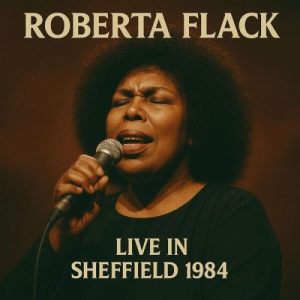
| Artist | Roberta Flack Related artists |
| Album name | Live in Sheffield 1984 |
| Country | |
| Date | 2025 |
| Genre | Jazz,Soul,R&B |
| Play time | 56:23 |
| Format / Bitrate | Stereo 1420 Kbps
/ 44.1 kHz MP3 320 Kbps |
| Media | CD |
| Size | 325 MB |
| Price | Download $2.95 |
Order this album and it will be available for purchase and further download within 12 hours
Pre-order album Tracks list
	Tracklist:

1. I Keep Forgettin' (03:54)
2. Killing Me Softly with His Song (05:07)
3. Feel Like Makin' Love (05:04)
4. River (05:36)
5. Jesse (03:47)
6. The Closer I Get to You (05:33)
7. I'm the One (03:43)
8. Making Love (08:03)
9. Carousel (04:05)
10. The Water Is Wide (01:57)
11. The First Time Ever I Saw Your Face (04:10)
12. Sunday and Sister Jones (05:20)


 moreRoberta Cleopatra Flack was born in Black Mountain, North Carolina, and
from the age of five was raised in Arlington, Virginia. Her mother played piano
and organ in church, while her father played piano and harmonica. At a very
young age, Flack followed in her parents' footsteps, providing accompaniment on
hymns such as Thomas A. Dorsey's "Take My Hand, Precious Lord" at the African
Methodist Episcopal Zion church she attended. Formal piano studies coincided
with her expanding musical interest that, in addition to traditional and
contemporary gospel, encompassed classical, jazz, R&B, and pop. Flack took
second prize in a state competition among 13-year-old Black pianists, and only
two years later secured a full music scholarship to nearby Howard University in
Washington, D.C. She studied piano and voice, and in 1958 earned a degree in
music education.

Flack put aside graduate studies after her father's death and went into
teaching, first in North Carolina, then back in D.C., and also taught private
piano lessons. At night, she performed in D.C. night clubs and eventually landed
a gig playing three sets five nights a week at Mr. Henry's, attracting audience
members such as Burt Bacharach, Dionne Warwick, and Johnny Mathis. When jazz
pianist and vocalist Les McCann caught her set at a benefit for the Inner City
Ghetto Children's Library Fund, he facilitated an audition with Joel Dorn at
Atlantic Records. Dorn signed Flack and either produced or co-produced Flack's
first four studio LPs.

First Take marked Flack's recorded debut in June 1969. The album was recorded in
ten hours with bassist Ron Carter, drummer Ray Lucas, and guitarist Bucky
Pizzarelli, and with strings and horns arranged by William Fischer. "Compared to
What," a protest song written by Gene McDaniels and originally recorded by Les
McCann, was issued as a single in promotion of the album. (The same month the
album was released, McCann and Eddie Harris performed "Compared to What" at the
Montreux Jazz Festival, documented later that year on Swiss Movement.) The
following August, after she sang and played piano on McCann's Comment, Flack
delivered Chapter Two. The set was co-produced by King Curtis and arranged by
Donny Hathaway, who met Flack at Howard and co-wrote two songs on the debut.
While the McDaniels-written single "Reverend Lee" and a version of Jimmy Webb's
"Do What You Gotta Do" proved to be most popular, Chapter Two was also
highlighted by a languid if powerful rendition of "Gone Away," written a couple
years earlier by Hathaway and Curtis Mayfield for Mayfield's group, the
Impressions.

In 1971, Flack scored her first hit singles by duetting with Hathaway on updates
of Carole King's "You've Got a Friend" and Phil Spector, Barry Mann, and Cynthia
Weil's "You've Lost That Lovin' Feelin'" (popularized by the Righteous
Brothers). The former reached number eight on the R&B chart, crossed into the
Top 40 of the pop chart (peaking at number 29), and was eventually nominated for
a Grammy in the category of Best R&B Vocal Performance by a Duo or Group. That
November, just after the latter single entered the charts, Flack released Quiet
Fire. A strong opening statement was made with "Go Up Moses," Flack's first
commercially released composition, written with Joel Dorn and the Reverend Jesse
Jackson. The album's only single, King and Gerry Goffin's "Will You Still Love
Me Tomorrow," began the singer's hold on Billboard's adult contemporary chart.
After the song ran its course, Atlantic issued "The First Time Ever I Saw Your
Face," off First Take, as a single. Clint Eastwood had included Flack's Ewan
MacColl cover in his psychological thriller Play Misty for Me. The version
subsequently topped the Billboard Hot 100 for six weeks, also reached the top of
the adult contemporary chart, and went to number four on the R&B survey. The
parent album was sent to the top of the pop and R&B charts. Remarkably, the
emergence of "The First Time Ever I Saw Your Face" coincided with the 1972
release of Roberta Flack & Donny Hathaway, containing the duo's two preceding
hit duets and a third one, "Where Is the Love," which crowned the R&B and adult
contemporary charts and topped out at number five on the Hot 100. At the 15th
annual Grammy Awards, "The First Time Ever I Saw Your Face" won Record of the
Year, and "Where Is the Love" took the award for Best Pop Vocal Performance by a
Duo, Group, or Chorus. Additionally, Quiet Fire was up for Best Pop Vocal
Performance, Female.

Flack's hot streak continued with her fourth album, Killing Me Softly, issued in
August 1973. The title number, written by Charles Fox, Norman Gimbel, and the
uncredited Lori Lieberman (who first recorded it), had a four-week reign atop
the Hot 100 and earned Flack her second consecutive Grammy for Record of the
Year. The follow-up single "Jesse," written by Janis Ian, gave Flack her fifth
Top 40 hit, while a ten-minute version of Leonard Cohen's "Suzanne" proved that
she still had a knack for stretching out. Flack spent over a year on her next
album, Feel Like Makin' Love, and in the process ended up producing under the
pseudonym Rubina Flake, after Joel Dorn distanced himself and intended
co-producer Gene McDaniels likewise opted to not see it through. Having produced
Atlantic albums by Marion Williams, Donal Leace, and Wayne Davis, Flack was not
new to the role but struggled when it came to her own sessions. The LP's March
1975 release was somewhat anticlimactic, as the McDaniels-penned title song, a
number one pop, R&B, and adult contemporary hit, preceded it by ten months.
Next, Flack teamed with McDaniels and Joe Ferla (whose credits as an engineer
included Donny Hathaway's Extension of a Man) to co-produce Blue Lights in the
Basement, its title a reference to house parties for intimate dancing. James
Mtume and Reggie Lucas, accomplished jazz musicians who were in Flack's band and
looking to further diversify, co-wrote "The Closer I Get to You," a sparking
duet with Hathaway that became Flack's third number one R&B single (number two
pop, number three adult contemporary).

Due to the long gap between her sixth and seventh albums, Flack was pressured by
Atlantic to quickly come up with her eighth one, and was likewise pushed to
record the theme song and other material for the film If Ever I See You Again,
writer/director/producer Joe Brooks' follow-up to You Light Up My Life. Brooks,
Joe Ferla, and Flack co-produced the parent album, Roberta Flack, and "If I See
You Again" was easily its biggest single, another number one hit on the adult
contemporary chart (number 24 pop, number 37 R&B). Flack was in the middle of
recording a second album of duets with Donny Hathaway when her singing partner
fell from the balcony of his hotel room. The tragedy was ruled a suicide.
Devastated, Flack completed the album, titled Roberta Flack Featuring Donny
Hathaway, and issued it in March 1980. A pair of joyous Top Ten R&B hits
resulted with "You Are My Heaven," a ballad written by Stevie Wonder and album
co-producer Eric Mercury, and the uptempo "Back Together Again," a James
Mtume/Reggie Lucas composition that featured an all-star group of backing
vocalists including Wonder, Luther Vandross, Gwen Guthrie, and Jocelyn Brown.
Flack and Hathaway were nominated for two more Grammys. Before the end of the
year, Flack and Peabo Bryson recorded and released a joint double live album,
Live & More, alternating between the singers' solo hits and renditions of
Flack-Hathaway material.

Flack and Bryson continued to be a formidable duo. Flack's soundtrack for the
1981 film Bustin' Loose, starring Richard Pryor and Cicely Tyson, included the
Bryson collaboration "Ballad for D.," an homage to Donny Hathaway. After the
1982 release of Flack's I'm the One, featuring the number 13 pop hit "Making
Love" -- another film theme, this one composed by Burt Bacharach, Carole Bayer
Sager, and Bruce Roberts -- the two singers paired back up for Born to Love.
Released in 1983, the album led with "Tonight I Celebrate My Love," a number 16
pop hit (Top Ten R&B and adult contemporary) written by Gerry Goffin and Michael
Masser.

Over the next several years, Flack performed extensively, including a tour with
Miles Davis, and worked on a couple studio projects -- a set of early R&B covers
and a Nat King Cole tribute -- that didn't reach fruition. In the thick of the
new jack swing era, she released Oasis and Set the Night to Music, albums
respectively issued in 1988 and 1991. "Oasis" itself, written by Mark Stephens
and producer/bassist Marcus Miller, returned Flack to the top of the R&B chart,
and the Ashford & Simpson collaboration "Uh-Uh Ooh-Ooh Look Out (Here It Comes)"
gave her a number one club hit. Another song on Oasis, "And So It Goes," was
written with longtime friend Maya Angelou. Set the Night to Music, with a couple
subtle exceptions, also stuck to slick and sophisticated contemporary R&B
without a hip-hop influence. The title song paired Flack with Maxi Priest (then
riding high off "Close to You") and was Flack's sixth and final Top Ten pop hit.

The only other proper studio album Flack released in the '90s was 1994's
Roberta, a set of pop, soul, and jazz covers that saw her connect with three
production teams: Katreese and Jerry Barnes (aka Juicy), longtime musical
director Barry Miles and Shane Keister, and Bernard Wright (Flack's godson) and
Richard Keller. In 1997, on the heels of Fugees' hugely successful cover of
"Killing Me Softly with His Song," Flack also released The Christmas Album, and
during the same decade, she cut two covers LPs for the Japanese market, namely
Stop the World and Friends. Her final album, Let It Be Roberta, was a Beatles
tribute released in 2012. She occasionally performed and recorded from then on,
contributing "Running" for the 2018 documentary 3100: Run and Become, and
collaborating in 2024 with Valerie Simpson and producer/musician Ebonie Smith on
"She Came Home Blameless," based on the Maya Angelou poem "The Mothering
Blackness." Between those two sessions, Flack received a Grammy Lifetime
Achievement Award and was among the first inductees into the Women Songwriters
Hall of Fame. A couple years before her final recording, Flack was diagnosed
with amyotrophic lateral sclerosis (aka ALS and Lou Gehrig's Disease). She died
of cardiac arrest on February 24, 2025. The Fugees' Lauryn Hill led a tribute to
Flack and neo-soul pioneer D'Angelo (who covered "Feel Like Makin' Love") at the
following Grammy Awards ceremony. © Andy Kellman


Roberta Flack - Live in Sheffield 1984.rar -  325.1 MB
Related artists
Roberta Flack
Album
- 2025 Holidays [EU]
- 2025 Live in Sheffield 1984
- 2024 Our Time (Live New York '71)
- 2024 Stay A While (Live)
- 2023 Ten Songs For You
- 2022 Bustin' Loose (Music From The Original Motion Picture Soundtrack)
- 2020 The Soul of Roberta Flack
- 2020 The Live Sessions (Live)
- 2012 Let It Be Roberta [2]
- 2012 Christmas Songs
- 2012 Roberta Flack & Donny Hathaway
- 2006 I'm the One
- 1999 FRIENDS - ROBERTA FLACK SINGS MARIKO TAKAHASHI -
- 1997 The Christmas Album
- 1994 Roberta
- 1993 Softly With These Songs: The Best Of Roberta Flack
- 1992 Stop The World [2]
- 1991 Set The Night To Music [2]
- 1988 Oasis [3]
- 1982 I'm The One [3]
- 1982 Im The One [2015 Remastered]
- 1981 [1990] The Best Of Roberta Flack
- 1980 Roberta Flack Featuring Donny Hathaway [2]
- 1978 Roberta Flack [3]
- 1977 Blue Lights In The Basement [4]
- 1975 Feel Like Makin' Love [4]
- 1973 Killing Me Softly [4]
- 1972 Roberta Flack & Donny Hathaway [2]
- 1971 Quiet Fire [6]
- 1970 Chapter Two [4]
- 1969 First Take [5]
- 1969 First Take (2014) [Hi-Res stereo] 24bit 192kHz
Compilation
- 2006 The Very Best Of Roberta Flack [2]
- 1993 Softly With These Songs: The Best Of Roberta Flack [7 82498-2, RM, US]
Single
- 2024 Killing Me Softly With His Song (Ben Liebrand Rework)
- 1996 Killing Me Softly With His Song
- 1976 Killing Me Softly With His Song [2]
- 1973 Killing Me Softly With His Song (Ben Liebrand Rework) [2024, RE, RM, US]
Soundtrack